



Blockchain C2 Is Here: What the ViteVenom npm Attack Means for Every JavaScript Team
ViteVenom uses blockchain-backed C2 on Tron and BSC to evade takedowns. Learn how this npm supply chain attack targets JavaScript teams and what to do.

When attackers start storing their command-and-control pointers on public blockchains instead of DNS records, the takedown playbook the industry has relied on for two decades stops working. That’s exactly what Checkmarx researchers documented this month with ViteVenom, a cluster of seven malicious npm packages that impersonate the @vitejs/* namespace and pull payloads through a four-tier C2 chain spanning Tron, Aptos, and Binance Smart Chain. If you build frontends, know this attack before your CI pipeline pulls in the wrong dependency.
Why Blockchain-Backed C2 Breaks the Takedown Model
According to Checkmarx researcher Pavan Gudimalla, the ViteVenom campaign is a sequel to an earlier operation called ChainVeil, both attributed to a threat actor tracked as SuccessKey. The malware uses what Gudimalla called an “unprecedented” four-tier blockchain C2 infrastructure: it queries the Tron blockchain for the latest transaction from the attacker’s wallet, decodes and reverses the data field to obtain a BSC transaction hash, extracts an encrypted payload from that BSC transaction’s input field, and decrypts it with a hard-coded key. If Tron fails, Aptos is the backup. If both blockchains fail, there’s still a plain HTTP fallback to a traditional C2 server.
Takedowns have historically depended on domain seizures, hosting provider abuse reports, and DNS sinkholing. None of that works against Tron or BSC. “The attacker stores payload pointers as transaction data on public blockchains rather than on domain names that can be seized, making the infrastructure nearly impossible to take down,” Gudimalla explained. If you’re a SOC lead relying on threat-Intel feeds of malicious domains, you now have a blind spot: an on-chain transaction hash is not a domain, and blocking a blockchain RPC endpoint at the firewall is a much bigger business decision than blocking a suspicious .xyz domain. Expect blockchain-native C2 to become the default for financially motivated supply chain actors within the next twelve months.
How ViteVenom Weaponizes the Vite Ecosystem
Where ChainVeil impersonated libraries for Tailwind, Sass, ORM, and rate-limiting tools using unscoped typosquats like rate-limit-flexible, ViteVenom specifically targets developers building with Vite and uses scoped package names to impersonate the legitimate @vitejs/* namespace. Checkmarx identified seven packages published between June 29 and July 3, 2026: @uw010010/vite-tree (1,070 downloads), @vite-tab/tab (289), @vite-ln/build-ts (252), @vite-MCP/vite-type (239), @vite-pro/vite-ui (200), @vitets/vite-ts (194), and @vite-ts/vite-ui (176). Evidence of the campaign goes back to February 27, 2026, when the linked cryptocurrency wallets were first activated.
The scoping is the psychological hook. A developer scanning a search result for @vite-ts/vite-ui is far more likely to trust it than vite-ui-lib because scoped packages feel organizational. And here’s the nastier engineering detail: the malicious code doesn’t execute at install time — it fires at import time. That’s a deliberate evasion of endpoint tools that hook npm install lifecycle scripts but never inspect what happens when a bundler resolves a module. If your team runs a lockfile audit on install but not a runtime dependency audit during build, you have a gap ViteVenom is designed to walk through. Teams working on regulated systems — the kind we describe in our healthcare software practice — should assume import-time execution is now table stakes for supply chain malware.
Why This Isn’t an Argument Against Blockchain
It would be lazy to read this story as “blockchain is the problem.” It isn’t. Public blockchains being censorship-resistant is a feature attackers are abusing precisely because it works as designed for legitimate use cases like settlement, notarization, and traceability. The same immutability that makes Tron useful for a threat actor is what makes on-chain records useful for auditing pharmaceutical shipments or tracking parts through a manufacturing supply chain. Engineering leaders evaluating whether a workload belongs on-chain or on a conventional datastore should still be doing that analysis on the merits — this comparison of blockchain versus traditional databases is the right framing.
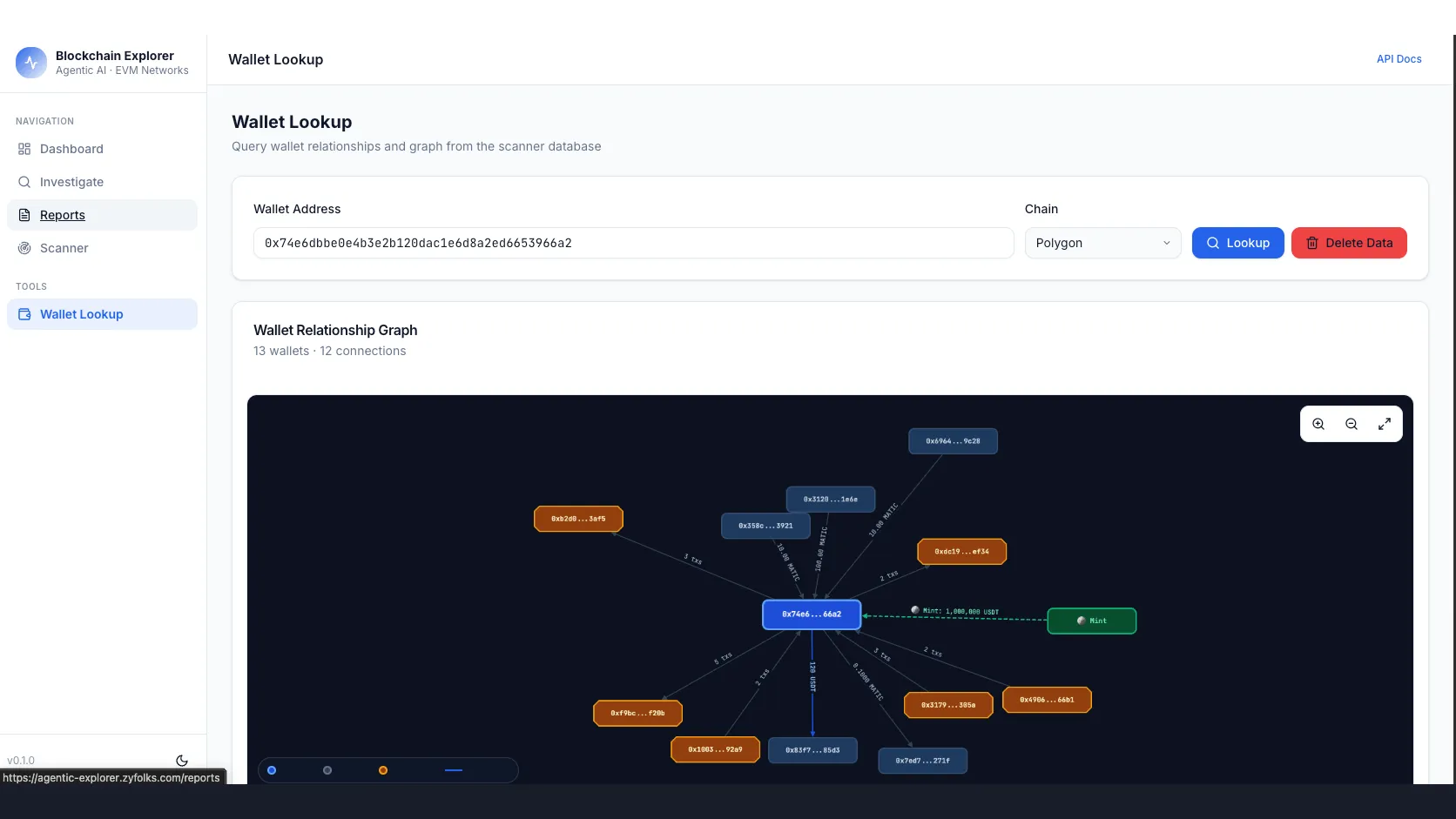
What’s changed is the defender’s threat model. If your organization runs an outbound egress policy, you now need to think about which chain RPC endpoints are reachable from build agents. Does your CI runner really need to talk to a public Tron node? Almost certainly not. Blocking wallet-lookup traffic from build environments is a cheap, high-leverage control that will neutralize the on-chain lookup step of ViteVenom-style malware without breaking any legitimate JavaScript workflow. That’s the practical mitigation nobody is talking about yet, and it’s the one your platform team should implement this quarter.
What Development Teams Should Do This Week
Checkmarx’s immediate guidance is straightforward: if any of the seven packages are installed, remove them, audit your dependency tree, rotate all credentials, and inspect .bashrc, .zshrc, and .profile for unauthorized modifications — the RAT is capable of reverse shell access, credential harvesting, file exfiltration, and persistent backdoor injection. But the deeper move is process change. Pin scoped packages to specific known-good publishers, treat any new @vite-* namespace package as suspect until proven otherwise, and enforce a policy that no new dependency lands without a review of its publish history and maintainer identity.
If you’re a startup shipping fast on Vite, add a dependency review step before merging. The friction is small; the alternative is a RAT decrypting payloads from Binance Smart Chain inside your production build. Within a year, at least one major npm registry incident will involve blockchain-based C2 as the default persistence mechanism, and registries themselves will start scanning for on-chain lookup patterns as a signal — the same way they scan for suspicious install scripts today.
FAQ
Q: What is ViteVenom and how is it different from ChainVeil?
A: ViteVenom is a cluster of seven malicious npm packages identified by Checkmarx that impersonate the @vitejs/* scoped namespace to target Vite developers. It shares tier-2 infrastructure — the same Tron wallet and Aptos account addresses pointing to the same BSC transaction — with ChainVeil, an earlier campaign by the same actor SuccessKey, but ChainVeil used unscoped typosquats against Tailwind, Sass, and ORM libraries instead.
Q: Why is blockchain-based C2 harder to shut down? A: Traditional command-and-control servers rely on domain names or IP addresses that can be seized by registrars or blocked by ISPs. Because ViteVenom stores payload pointers as transaction data on public blockchains like Tron, Aptos, and Binance Smart Chain, there is no central authority that can remove those transactions, and Checkmarx describes the resulting infrastructure as “nearly impossible to take down.”
Q: How can I check if my project is affected?
A: Run npm ls against the seven package names listed by Checkmarx (@uw010010/vite-tree, @vite-tab/tab, @vite-ln/build-ts, @vite-MCP/vite-type, @vite-pro/vite-ui, @vitets/vite-ts, and @vite-ts/vite-ui). If any appear, remove them immediately, rotate credentials, and inspect shell profile files for unauthorized modifications.
Key Takeaways
- Egress filtering on CI/CD build agents should now include public blockchain RPC endpoints — Tron, Aptos, and BSC are attacker infrastructure until proven otherwise for your workload.
- Import-time execution is the new install-time; dependency scanners that only inspect lifecycle scripts will miss the next generation of npm malware.
- Scoped package impersonation of trusted namespaces like
@vitejs/*will accelerate, so registry-side namespace protection is overdue. - Teams shipping on Vite should introduce mandatory dependency review before merge and treat any newly published
@vite-*scoped package as untrusted by default. - Expect npm, GitHub, and other registries to begin flagging on-chain lookup patterns as a malware signal within the next year, similar to how suspicious install scripts are flagged today.