

You need to trace a crypto wallet — but you're not a blockchain engineer
Blockchain data is public, which sounds helpful right up until you open it. What you find is a wall of hex strings, hash IDs and timestamps that means…

Blockchain data is public, which sounds helpful right up until you open it. What you find is a wall of hex strings, hash IDs and timestamps that means nothing to a human. An AI blockchain explorer lets you ask a plain-English question — “show the last 5 transactions for this address” — and reads the answer back to you in a sentence, pulled from the real chain.
Public doesn’t mean readable
Every transaction on Ethereum, BSC or Polygon is out in the open. Anyone can look. The problem is that “looking” means scrolling through raw ledger entries — 42-character addresses, gas values, contract calls — with zero context. If your compliance officer, fraud analyst or due-diligence lead isn’t also a blockchain developer, that data may as well be encrypted. Most teams that genuinely need to investigate a wallet don’t have someone who can read the chain directly, so they either pay a specialist every time or quietly give up.
The part that makes it work (the short technical bit)
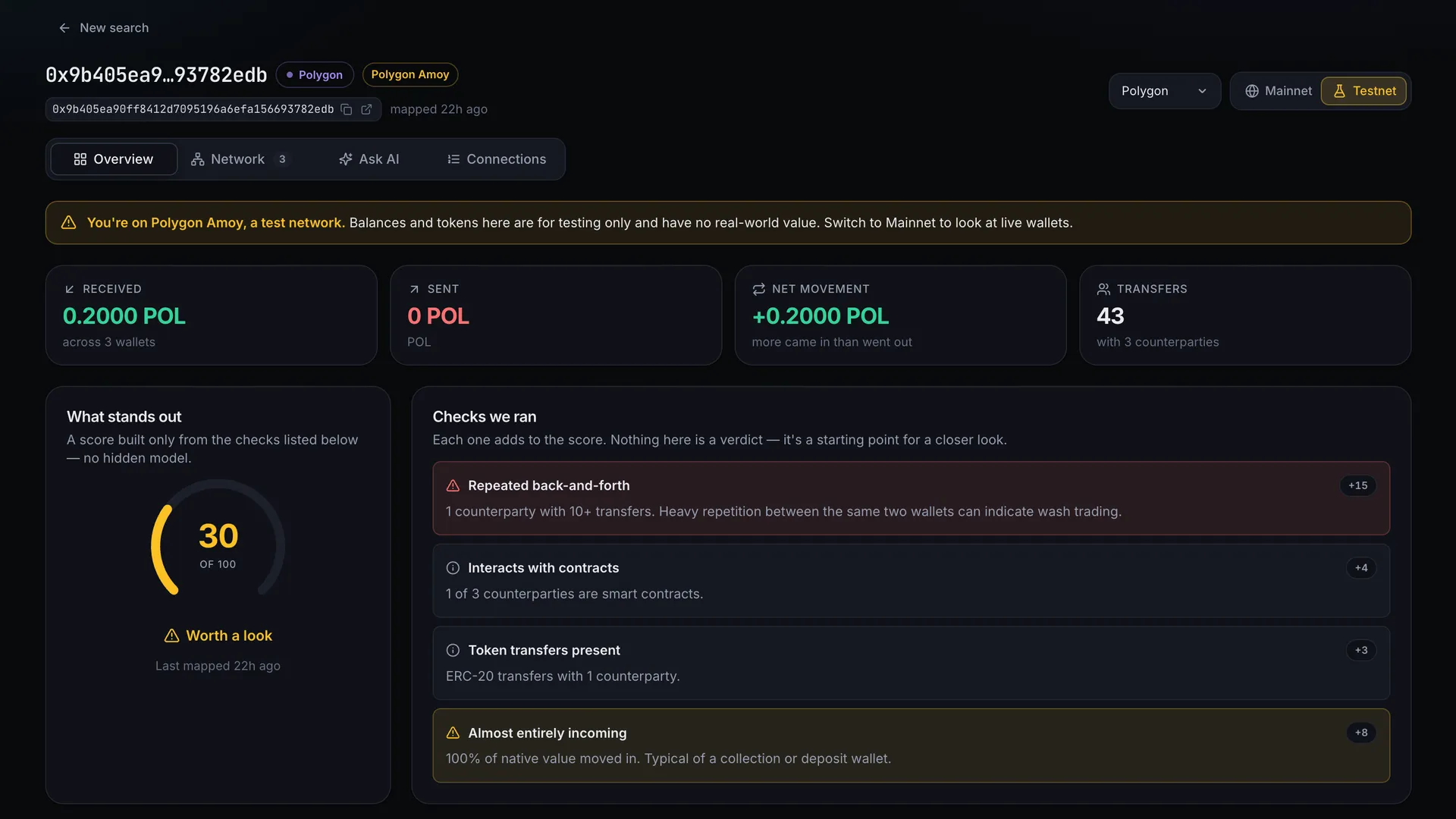
We built this explorer around one idea: the question should be the interface. You type “show the last 5 transactions” and the system translates that into a precise query against live on-chain data, then hands back the actual transactions — not a guess. The natural-language layer sits on top; underneath, every answer is grounded in what the chain really recorded. So you get the ease of asking a colleague with the accuracy of reading the ledger yourself. No query language, no engineer in the middle.
Who actually needs this
Anyone who has to answer “where did this money go?” without a technical team behind them. A compliance staffer checking an address before onboarding a client. A fraud team following a suspicious payout. A founder doing diligence on a partner’s wallet before signing. The common thread isn’t crypto expertise — it’s a business question that happens to live on a blockchain, and a person who shouldn’t need to learn Solidity to answer it.
FAQ
Do I need to understand crypto to use it? No. If you can ask a question in a sentence, you can investigate a wallet. Removing the engineer from the middle is the whole point.
Is the data accurate, or is the AI guessing? The AI turns your question into a query. The answer comes from real on-chain records, not the model’s imagination. You’re reading the ledger — just in plain English.
Bottom line: if reading a blockchain currently requires hiring someone who can read a blockchain, you’re solving the wrong problem. We built this one for a client — and we can build one for you.