

Data Engineering & Analytics
Numbers your team stops arguing about
We move data out of the systems that hold it, reconcile the definitions, and land it somewhere your team can query — so reporting stops depending on one person's spreadsheet.
Talk to us about your projectWhy this usually comes before the AI project
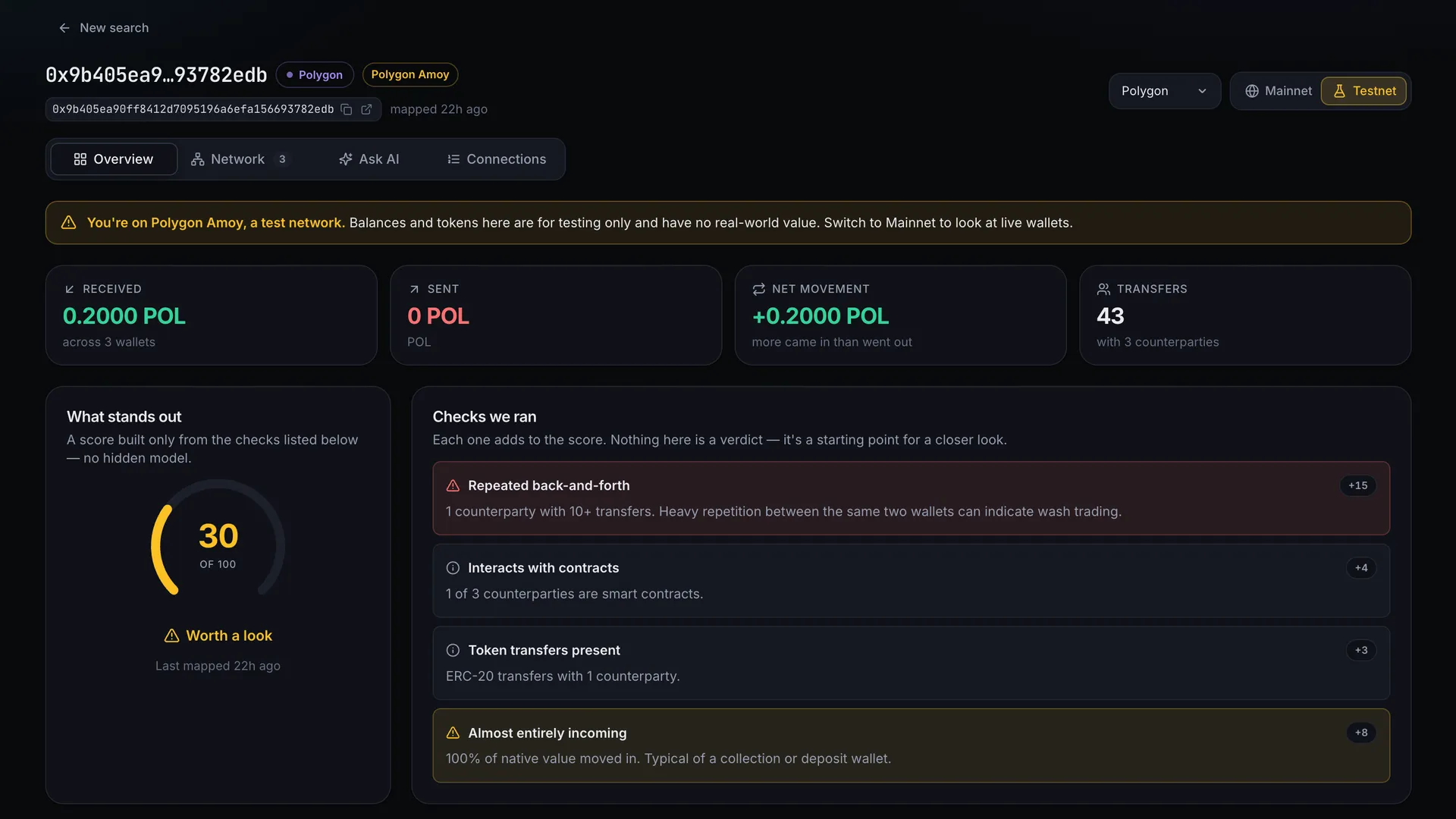
Most stalled AI projects are data projects wearing a costume. The model needs years of clean order history joined to customer records. What exists is a production database nobody is allowed to query, a CSV someone updates by hand, and two systems that disagree about what counts as a customer.
Data engineering is the unglamorous work of fixing that. Extract from the source systems, reconcile the definitions, load it somewhere built for questions rather than transactions, and put a check on every step so you find out when it breaks. The analytics is what you get once that holds.
Capabilities
What we build
Picked against the questions you actually need answered. A warehouse nobody queries is an expensive second copy of your production database.
Data pipelines
Scheduled and event-driven ingestion from your CRM, billing system, product database and third-party APIs, orchestrated in Airflow or Dagster with retries per task.
Warehousing
A warehouse on Postgres, BigQuery, Snowflake or ClickHouse, sized to your data rather than the vendor's case study, with alerts on query spend.
Transformation and modelling
dbt models kept in version control, with a tested definition behind each metric, so "active customer" means the same thing in every report.
Data quality checks
Freshness, row-count and uniqueness tests that run on every load and fail loudly, instead of a dashboard quietly serving yesterday's numbers as today's.
Awkward and legacy sources
Reading from SQL Server, Oracle, sFTP drops and spreadsheets with no API, via change data capture or a read replica, so production stays untouched.
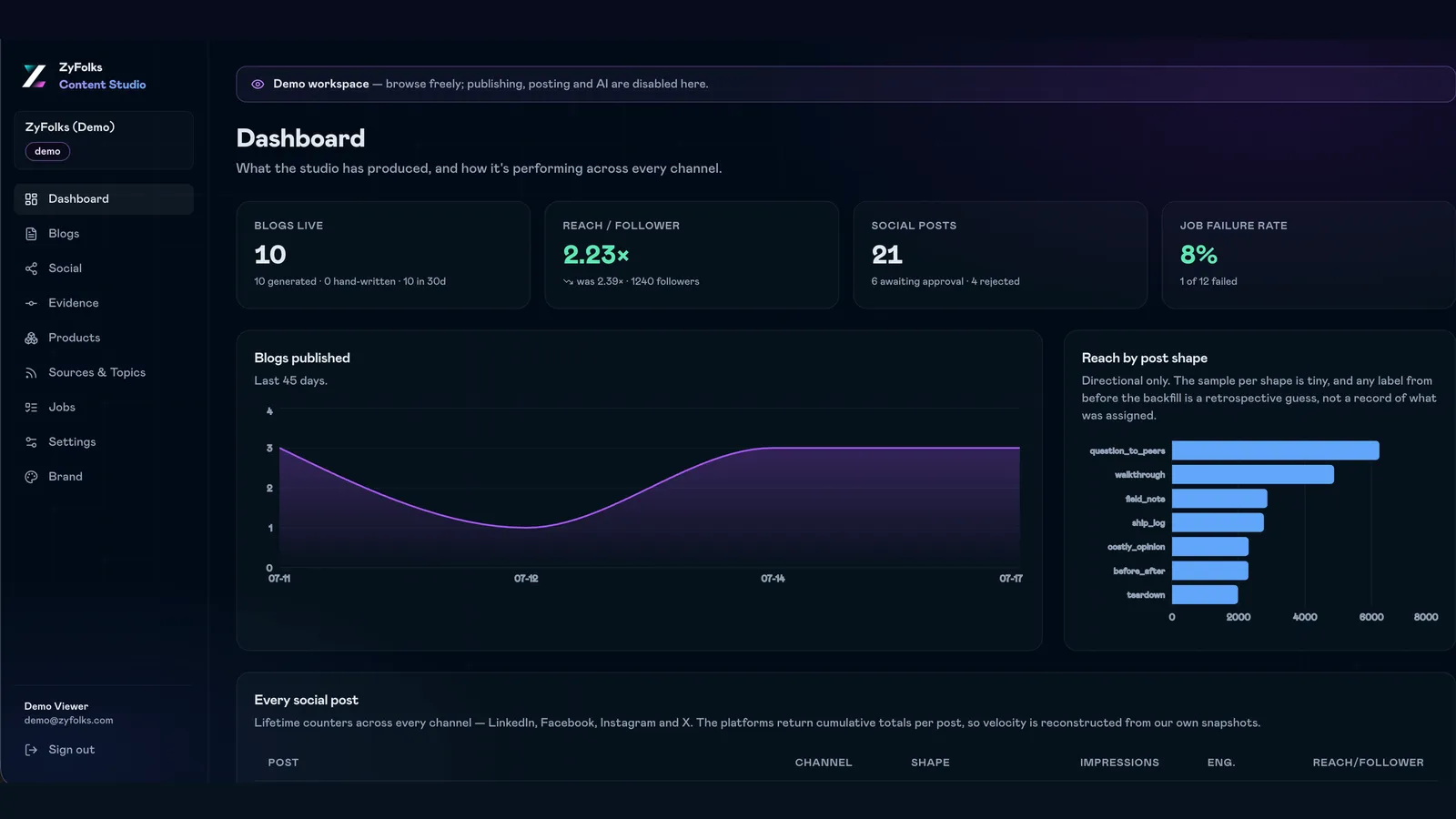
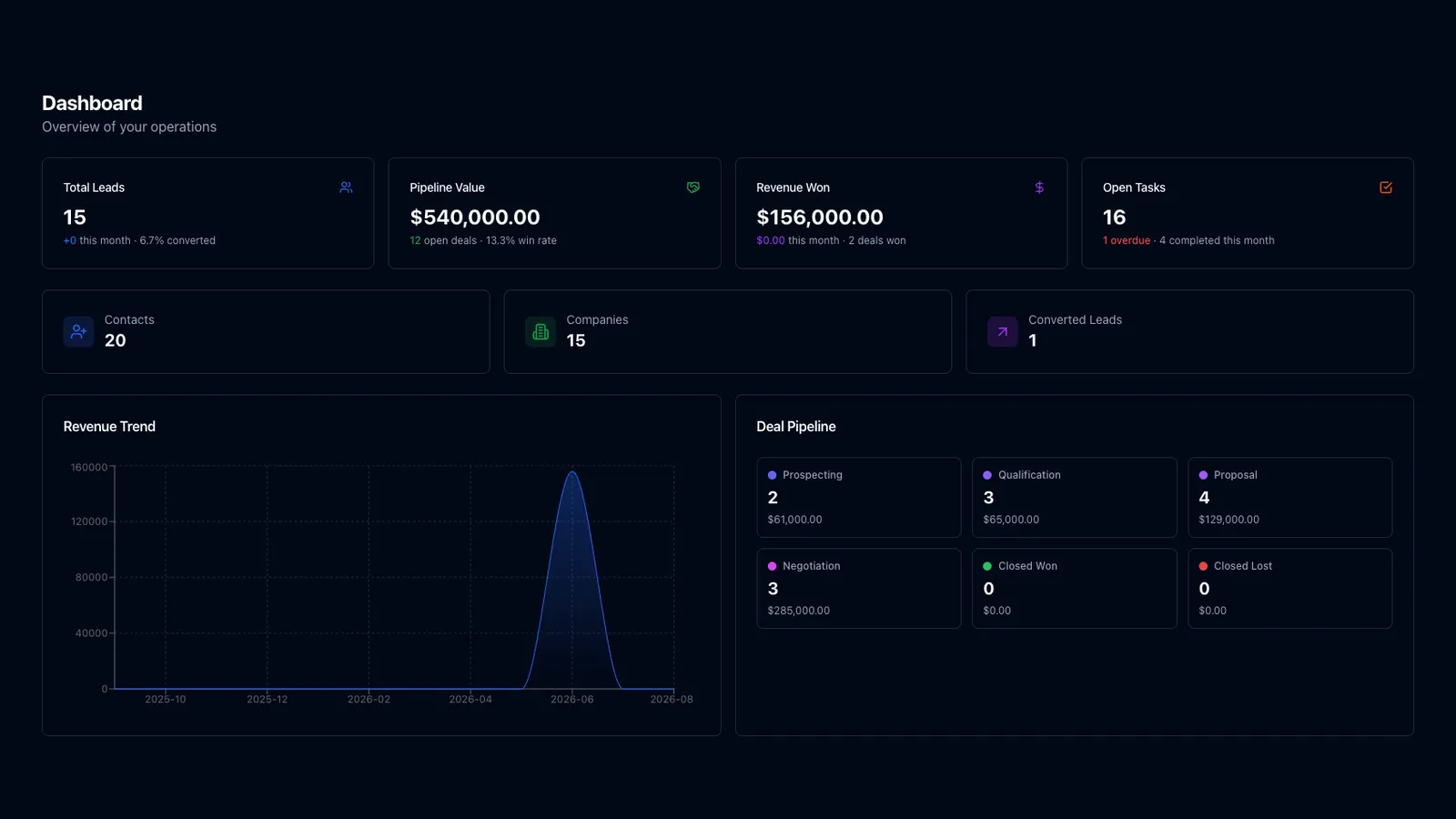
Dashboards and reporting
Metabase, Looker Studio or Power BI wired to the warehouse, plus the scheduled email that puts one number in front of the person who acts on it.
Event and product analytics
A tracking plan agreed before instrumentation, so events carry consistent names and properties and you are not rewriting months of history later.
Reverse ETL and activation
Pushing the modelled segment back into HubSpot, Salesforce or the product itself, because a number only matters where somebody can act on it.
AI and ML readiness
Feature tables, labelled training sets and documented lineage for every column, which is what an AI project needs in place before it can start.
What you get
What you own at the end
Everything runs in your accounts, under credentials you control, and can be handed to another team without a call with us.
- PIPELINES
- Running ingestion, in your cloud
- Deployed with the orchestration code, schedules and credentials handed over. Failure alerts go to a channel your team watches, so you are never waiting on us to notice that a source stopped sending.
- DATA MODEL
- Transformation code and metric definitions
- The dbt project in your Git repository, with a written definition of every metric and the tests that guard it. A new analyst can read why revenue excludes refunds.
- WAREHOUSE
- A queryable store with access control
- Schemas and read access set per team, plus a documented monthly running cost at your current volume and the query patterns that get expensive first as the data grows.
- DASHBOARDS
- Reports tied to named decisions
- Each one recorded with who reads it and what they do differently because of it. Anything that cannot pass that test, we would rather not build, and we will say so.
How we work
From scattered sources to a number you trust
Timelines below are typical for a first warehouse. Data work has a habit of revealing that a source system is worse than anyone said, and we would rather find that in week two.
Source audit
1–2 weeksWe read your actual tables and exports, list what each system holds, and write down every place where two of them disagree about the same fact.
Model and prototype
2–3 weeksOne warehouse, a few core metrics, a first dashboard on real data. Sometimes this shows the history you were counting on does not exist, which changes the plan.
Build
4–10 weeksThe remaining sources, transformation models, quality tests, orchestration and access control, shipped in increments so a metric becomes usable before the whole thing is finished.
Run and extend
OngoingWatching what breaks, adding sources as they appear, and cutting warehouse cost once real query patterns show where the money is going.
Is this the right service for you?
Worth reading before you get in touch — it saves both of us a call.
A good fit if…
- Your reporting depends on a spreadsheet one person maintains by hand
- Two systems give different answers to the same basic question
- An AI project is waiting on data nobody trusts yet
- Analysts spend more time assembling the numbers than reading them
Probably not, if…
- You mainly need two tools kept in sync — see Integrations & Custom API Development
- The analytics belong inside the product you sell — see AI-Integrated Software
- You need hosting and monitoring set up, not data modelled — see DevOps & Cloud Infrastructure
- One system holds everything and its built-in reports already answer your questions
Frequently Asked
Questions
Common questions about pipelines, warehouses, dashboards, and what it costs to keep them running.
Three things, mostly. The number of source systems, because each one has its own auth, rate limits and quirks. The state of the data, since a system where the same customer exists three times costs far more to model than one with clean keys. And how far back you need history, because old exports usually arrive in a different shape from current ones. The number of dashboards barely matters by comparison. We audit the sources first and tell you which ones are not worth connecting yet.
Usually a first useful dashboard lands within three to five weeks, covering a small set of metrics from one or two sources. That is deliberate. A narrow slice people actually open tells us more about what matters than a long build against a requirements document written before anyone saw the data. The remaining sources and the deeper models follow, and by then you have a real opinion about what you want. If you need something faster, say so and we will scope smaller.
It will break at some point. Vendors rename fields, an API version is retired, someone edits a spreadsheet column heading. The difference is whether you hear about it from an alert or from a board meeting. Every pipeline we build carries freshness and row-count checks that fail the load rather than write partial data, and the alert goes to a channel your team watches. Fixing a changed source is usually quick once you can see which step failed and when it last succeeded.
You do. The orchestration code, the transformation models and the infrastructure definitions live in your Git repositories and run in your cloud accounts, under credentials you control. We host nothing you would later need to migrate off. That includes the written metric definitions, which are often the most valuable part of the whole engagement, because they record why revenue excludes refunds and what counts as an active account. Another team should be able to pick the project up cold. That is the test we hold it to.
Often it is enough, and we will say so. If everything already lives in one system, the volume is modest, and its built-in reports answer your questions, a warehouse buys you complexity and a monthly bill. The case for one starts when reporting queries slow the application down, when you need to join data across systems that know nothing about each other, or when you need history the production database overwrites. Those are the questions we ask before recommending anything at all.
Frequently, yes. Most AI work needs a training set or a retrieval corpus, and both mean joining records across systems and agreeing what a single row represents. That is data engineering regardless of what the project is called. If your data is already modelled and trusted, skip this and go straight to AI Agents, AI Automation or AI-Integrated Software. If it is not, running the AI project first tends to produce a demo that works on the sample and falls over on the real data.
Have a project in mind?
Fixed price after a paid discovery — no hourly billing. A real engineer reads every enquiry, and we reply within 24 hours.