



Your leads live in one app and your invoices in another. That gap is costing you.
Most growing teams don't have a sales problem or an accounting problem. They have a hand-off problem. A deal closes in the CRM, someone re-types the details…

Most growing teams don’t have a sales problem or an accounting problem. They have a hand-off problem. A deal closes in the CRM, someone re-types the details into a separate invoicing tool, and a third spreadsheet tracks whether the money actually arrived. Every hand-off is a place for things to quietly go missing.
The real cost is the copy-paste between apps
You feel it as small, daily friction. A quote that never became an invoice. A closed deal nobody billed for a week. An expense approved over WhatsApp and then forgotten. None of these is a disaster on its own, but together they’re a slow leak: revenue that’s earned but not collected, and hours spent reconciling apps that were never meant to talk to each other.
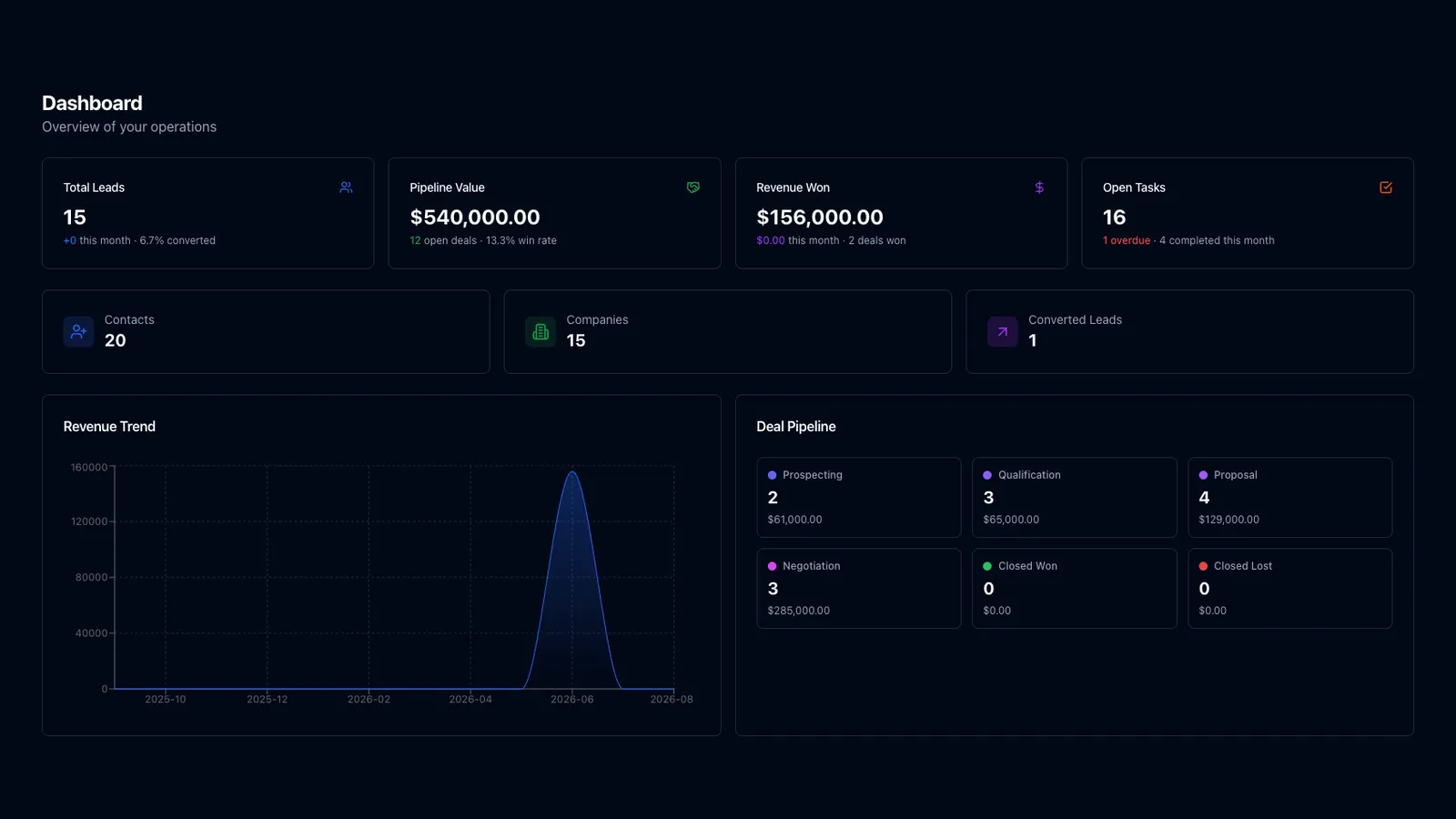
OperationsHub was built for a client who was tired of exactly this. Leads, contacts, companies, deals, tasks, quotes, invoices and expenses all sit in one system, on one dashboard. When a deal is won, its quote and invoice are already attached to it. Nothing gets re-keyed.
How one platform closes the gap (the light technical bit)
The trick isn’t clever AI. It’s a shared data model. In most businesses the CRM and the accounting tool each keep their own copy of “the customer,” and those copies drift apart. In one unified platform a contact, the deal, the quote and the invoice all point to the same underlying record. Change a client’s details once and every document that references them is correct. That single source of truth is the whole reason the copy-paste disappears.
For you, it means the dashboard reflects reality: what’s in the pipeline, what’s been billed, what’s been paid and what you’ve spent, without anyone stitching four exports together in Excel on a Friday.
We built this, and we could build yours
OperationsHub is a client showcase, not something we sell. We’re sharing it because the pattern is common: a business outgrows the “CRM here, invoices there, expenses in a sheet” setup and needs one place. If that’s you, we can build something shaped to your actual workflow rather than forcing you into someone else’s.
FAQ
Do I have to replace all my tools at once? No. Most teams start with the part that hurts most, usually deal-to-invoice, and grow the platform from there.
Is a custom platform overkill for a small team? Often, yes. If your process is standard, off-the-shelf tools are cheaper. Custom pays off when your workflow is specific enough that generic tools make you work around them.
Bottom line: if your team is re-typing the same customer into three different apps, you don’t need more tools, you need them to be one.