




The Case Against Replacing Your Support Team With AI
Three published findings on AI customer support: chatbot answers carry legal liability, 'agentless' plans often get reversed, and AI helps most when it assists agents rather than replacing them.

The decision most founders get backwards
The pitch for AI customer support is seductive: point a chatbot — software that answers customer questions in a conversation — at your inbox, let go of some headcount, watch the cost line drop. But three separate published findings, from a law firm, a research outfit, and a national economics bureau, all point the other way. The money isn’t in replacing your support team. It’s in making the one you have faster — and in not getting sued.
Here’s what the material actually says.
A wrong chatbot answer is a company statement you’ll pay for
Start with the consequence, because it’s the expensive one. If your chatbot gives a customer wrong information, your business can be held legally and financially liable — not merely embarrassed.
This isn’t hypothetical. A tribunal held Air Canada liable for negligent misrepresentation (giving false information that a customer reasonably relies on) after its chatbot gave wrong details about bereavement fares. The airline tried to argue the bot was a separate, independent actor. The tribunal rejected that outright. As the law firm Skadden puts it, “While a chatbot has an interactive component, it is still just a part of Air Canada’s website.”
The practical takeaway: treat every answer your chatbot produces as an official company statement. Review the content it draws on for accuracy, and don’t assume a “it’s just a bot” disclaimer will shield you. If the bot can quote a policy, it can quote it wrong — and you own the result.
The ‘agentless’ plan tends to get reversed
Some operators go further and plan to cut most or all human support roles when AI rolls out — the so-called “agentless” model. The research suggests that plan often doesn’t survive contact with reality.
According to Digital Commerce 360, reporting on Gartner: “Gartner also forecasts that by 2027, half of the organizations that planned major headcount cuts tied to AI will abandon those efforts after falling short of their ‘agentless’ goals.”
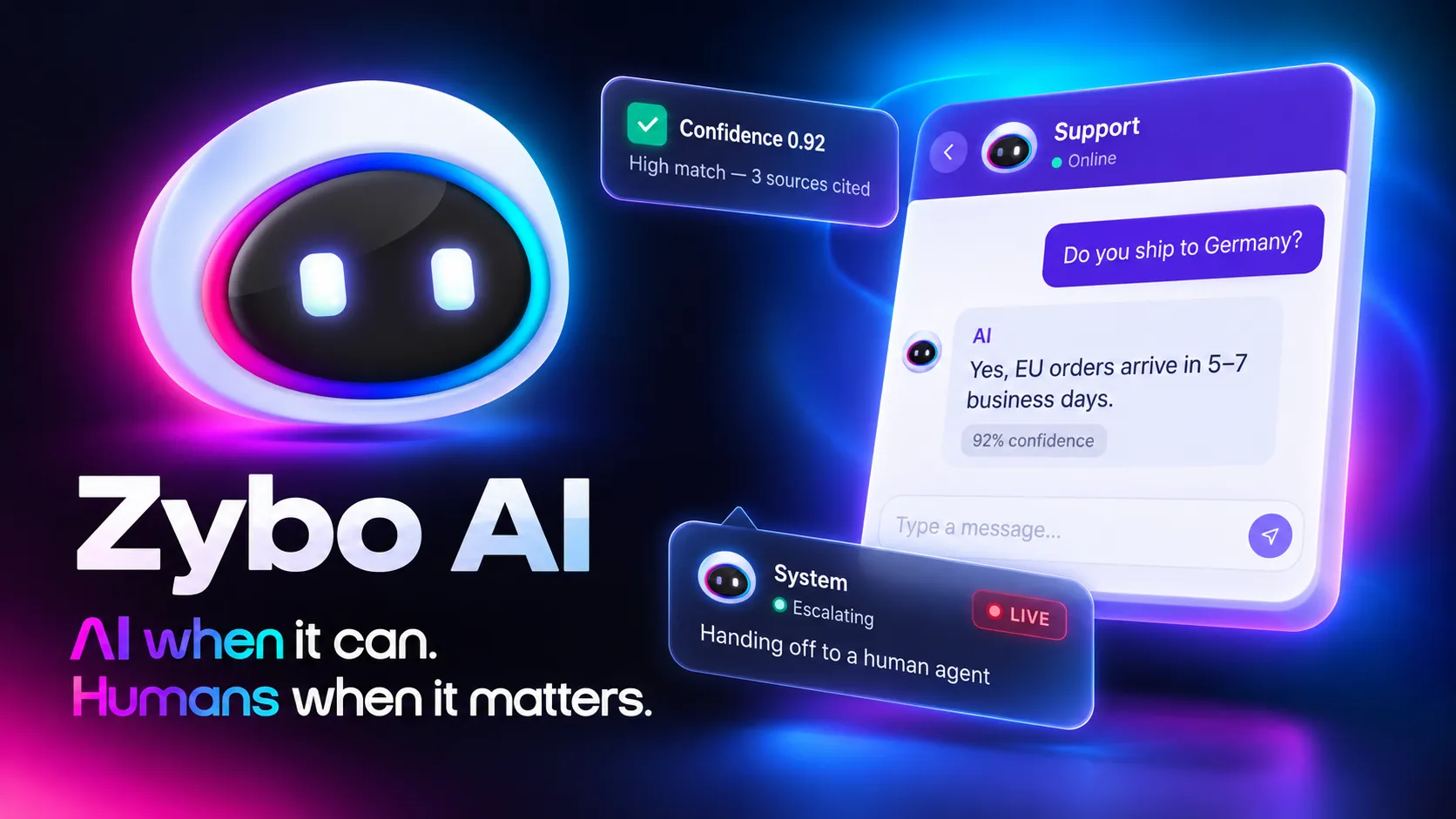
Half abandoning course is not a rounding error. And the cost of being in that half is real: you cut staff, fall short, then face the expense and disruption of rehiring and restaffing — all while complex or sensitive customer issues go unhandled in the gap. The safer read of the material is to use AI mainly for routine requests and keep people available for the hard and delicate cases.
AI pays off as an assistant, especially for new hires
So where’s the actual return? In helping your existing agents work faster — and it helps your newest ones most.
The National Bureau of Economic Research studied generative AI as a tool for support agents and found it “increases productivity, as measured by issues resolved per hour, by 14% on average, including a 34% improvement for novice and low-skilled workers but with minimal impact on experienced and highly skilled workers.”
Read that carefully, because it reframes the whole decision. The gains concentrate on newer, less-experienced staff. AI here acts like an always-on senior colleague looking over a junior agent’s shoulder — suggesting answers, surfacing the right policy, shortening ramp-up time. Your most experienced agents, the ones you’d least want to lose, saw minimal change. That’s the opposite of a case for cutting the team. It’s a case for keeping it and speeding it up.
What this means for your rollout
Put the three together and the shape is clear:
- Deploy AI to assist, not replace. The measured productivity win — 14% on average, 34% for novices — comes from agents using the tool, not from removing them.
- Keep humans on the hard cases. Routine requests are fair game for automation. Complex and sensitive ones are where cut-too-deep plans unravel, and where half of aggressive headcount plans are forecast to reverse.
- Govern the bot’s answers like published policy. You are liable for what it says. Accuracy review isn’t optional polish; it’s the thing standing between you and a negligent-misrepresentation claim.
None of this says AI support is a bad investment. It says the best version of it is boring: a faster team, fewer wrong answers, and no sudden rehiring cycle a year later. The flashy version — fire the humans, trust the bot — is the one the published evidence keeps arguing against.
Sources
- Skadden — https://www.skadden.com/insights/publications/2024/02/recent-developments-that-could-impact-how-companies
- Digital Commerce 360 — https://www.digitalcommerce360.com/2025/09/15/gartner-ai-wont-displace-human-agents-for-now/
- National Bureau of Economic Research — https://www.nber.org/papers/w31161